Is a Basement Renovation Worth It? Understanding Basement Renovation ROI in MN
Wondering if a basement remodel is worth it? Learn what kind of basement renovation ROI to expect in MN, what factors affect value, and how to make...
Transform your Minnesota basement into warm, dry, usable living space. Learn the best layouts, materials, and moisture solutions for long-lasting comfort.

Highlights:
In Minnesota, basements have incredible potential. They can become family rooms, guest suites, offices, gyms, entertainment spaces, or even multi-use flex rooms that adapt as your needs change. Yet many homeowners still live with cold floors, dated finishes, low ceilings, musty smells, or layouts that feel disconnected from the rest of the home.
At Home Visions Carpentry, we help homeowners turn lower levels into inviting, comfortable, and code-compliant living spaces. The key is to address Minnesota’s climate first, temperature swings, humidity, and soil conditions, then build a space that feels like a natural extension of the home above it. With the right plan, a basement can become one of the most valuable and enjoyable parts of your home.
Every successful Minnesota basement remodel starts with moisture control. Because basements sit below grade, they experience humidity, condensation, and ground moisture differently than the rest of the home. We follow guidance from the U.S. Environmental Protection Agency on moisture prevention and ensure proper vapor management in walls and floors.
We inspect your basement for foundation cracks, insulation gaps, air leaks, and drainage concerns. Sealing and addressing these early avoids future damage and creates a healthier, more comfortable lower level.
Quality insulation is one of the most significant upgrades in a basement remodel. Properly installed insulation helps maintain even temperatures, reduces drafts, and improves energy efficiency. The Minnesota Department of Commerce recommends insulation strategies that prevent condensation while keeping heat where it belongs.
Whether we use rigid foam along exterior walls, sound-deadening insulation between rooms, or a hybrid approach, the goal is a basement that feels as warm and inviting as the rest of your home.
Basements offer freedom to rethink how your home works. Some families want a second living room, others need a quiet office, or a spacious place for kids to play. Many homeowners choose a layout that blends entertainment, storage, and a guest suite for flexibility.
If you’re considering a bedroom, we plan for egress early to meet Minnesota building code, improve safety, and bring natural light into deeper parts of the basement. Egress windows are one of the best functional and aesthetic upgrades in a basement remodel.
Ready to turn your basement into a warm, usable living space?
Request a free consultationBasement flooring needs to handle moisture, cold concrete, and temperature changes. We often recommend luxury vinyl plank (LVP), tile, or engineered wood designed for below-grade use. These materials stay dimensionally stable and resist humidity.
If you want extra comfort, in-floor heat adds a layer of luxury, especially in family rooms or guest suites. These systems work with many types of basement-approved flooring.
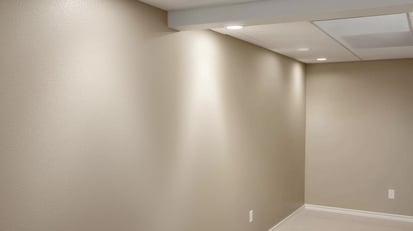
Standard drywall can work beautifully in basements when installed with the right framing, insulation, and vapor control. In moisture-prone areas, we may recommend mold-resistant drywall or specialty backer boards. Flexible ceiling options include drywall for a clean finish or suspended systems for easy access to plumbing and electrical.
Basements benefit from a well-planned lighting design that makes the space feel warm, open, and comfortable. While Home Visions Carpentry does not provide electrical services, we help homeowners understand where lighting can have the greatest impact. Recessed lights, wall sconces, and accent fixtures, installed by a licensed electrician, can eliminate dark corners and brighten key areas. Larger, well-placed egress windows also increase natural light and make the lower level feel more connected to the rest of the home.
Basement remodeling involves plumbing, electrical, egress installation, and structural considerations—areas where licensing matters. A licensed contractor keeps your project safe, code-compliant, and documented for future resale. Home Visions Carpentry manages the entire process, from planning to final walkthroughs, so you get a finished space that lasts.
Let’s transform your basement into a space your family loves.
Schedule your free home visitCosts vary by size, layout, and features, but most Minnesota basements fall within a wide range, depending on finishes and room types. We provide a detailed, transparent quote after a home visit.
Yes. Minnesota building code requires a compliant egress window for any legal bedroom. We install egress systems that meet code and bring in natural light.
Most projects take 4–10 weeks, depending on scope, layout changes, plumbing, and custom features. The timeline is finalized before we begin construction.
Moisture-resistant drywall, LVP flooring, porcelain tile, rigid foam insulation, and below-grade-rated framing materials perform best in Minnesota’s climate.
Wondering if a basement remodel is worth it? Learn what kind of basement renovation ROI to expect in MN, what factors affect value, and how to make...
Maximize every inch of your small bathroom with clever design tips and space-saving solutions. These remodel ideas prove that size doesn’t limit...
Remodeling your basement for rental income? Learn how to design a smart, compliant basement rental in MN—and how Home Visions Carpentry can help you...